Items filtered by date: August 2025
Inspect Your Feet Regularly for Abnormalities if You're Diabetic
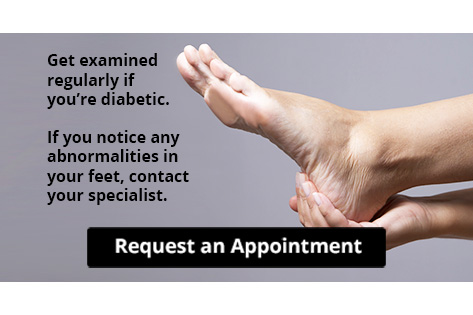
Diabetic patients often have decreased sensitivity in their feet, which makes a visual inspection of the feet even more important. If you're diabetic, having periodic screenings is extremely important for maintaining the overall health of your feet.
Twists and Sprains on the Trail

Trail running exposes the feet and ankles to forces and hazards not found on smooth pavement. Uneven ground, hidden roots, and shifting rocks can quickly lead to rolled ankles, strained ligaments, or stress fractures. The constant changes in slope and surface demand rapid adjustments in foot placement, increasing the chance of missteps that overstretch tendons or tear soft tissue. Repeated downhill impact can bruise the heel or inflame structures like the plantar fascia. In some cases, sudden landings on unstable surfaces cause foot bone injuries that require weeks of recovery. Trail conditions such as mud, loose gravel, and water crossings can make slips more likely, leading to sharp impacts or twisting falls. Because these injuries can escalate and lead to long-term complications if ignored, it is suggested that you visit a podiatrist for any lingering pain, swelling, or difficulty bearing weight after a run.
Ankle and foot injuries are common among athletes and in many sports. They can be caused by several problems and may be potentially serious. If you are feeling pain or think you were injured in a sporting event or when exercising, consult with one of our podiatrists from BayCity Associates in Podiatry . Our doctors will assess your condition and provide you with quality foot and ankle treatment.
Common Injuries
The most common injuries that occur in sporting activities include:
- Achilles Tendonitis
- Achilles Tendon Rupture
- Ankle Sprains
- Broken Foot
- Plantar Fasciitis
- Stress Fractures
- Turf Toe
Symptoms
Symptoms vary depending upon the injury and in some cases, there may be no symptoms at all. However, in most cases, some form of symptom is experienced. Pain, aching, burning, bruising, tenderness, tightness or stiffness, sensation loss, difficulty moving, and swelling are the most common symptoms.
Treatment
Just as symptoms vary depending upon the injury, so do treatment options. A common treatment method is known as the RICE method. This method involves rest, applying ice, compression and elevating the afflicted foot or ankle. If the injury appears to be more serious, surgery might be required, such as arthroscopic or reconstructive surgery. Lastly, rehabilitation or therapy might be needed to gain full functionality in the afflicted area. Any discomfort experienced by an athlete must be evaluated by a licensed, reputable medical professional.
If you have any questions please contact our offices located in Erie, PA and Meadville, PA . We offer the newest diagnostic and treatment technologies for all your foot and ankle needs.
Finding Relief from Arthritis in the Feet and Ankles
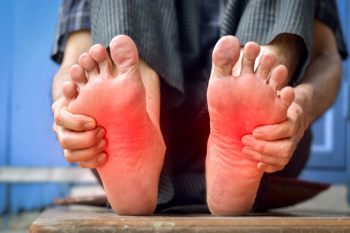
Arthritis in the feet and ankles can cause stiffness, swelling, and pain that affects daily mobility and overall quality of life. The joints most often affected include the toes, midfoot, and ankle, making walking or standing difficult. Relief begins with gentle exercises to maintain joint function and flexibility, along with weight loss to reduce pressure on the joints. Supportive footwear with cushioning and stability can also ease discomfort. A podiatrist can evaluate your specific condition and provide personalized treatment, which may include custom orthotics, medication, or advanced therapies. If arthritis is limiting your movement, it is suggested that you consult a podiatrist who can provide effective relief tips for arthritic feet and ankles.
Arthritis can be a difficult condition to live with. If you are seeking treatment, contact one of our podiatrists from BayCity Associates in Podiatry . Our doctors can provide the care you need to keep you pain-free and on your feet.
Arthritic Foot Care
Arthritis is a joint disorder that involves the inflammation of different joints in your body, such as those in your feet. Arthritis is often caused by a degenerative joint disease and causes mild to severe pain in all affected areas. In addition to this, swelling and stiffness in the affected joints can also be a common symptom of arthritis.
In many cases, wearing ill-fitting shoes can worsen the effects and pain of arthritis. Wearing shoes that have a lower heel and extra room can help your feet feel more comfortable. In cases of rheumatoid arthritis, the arch in your foot may become problematic. Buying shoes with proper arch support that contour to your feet can help immensely.
Alleviating Arthritic Pain
- Exercises that stretch the foot can prevent further pain and injury and increase mobility
- Most of the pain can be alleviated with anti-inflammatory drugs, heat, and topical medications
- Massages can help temporarily alleviate pain.
It is best to see your doctor for the treatment that is right for your needs and symptoms. Conditions vary, and a podiatrist can help you determine the right method of care for your feet.
If you have any questions please feel free to contact our offices located in Erie, PA and Meadville, PA . We offer the newest diagnostic tools and technology to treat your foot and ankle needs.
Post-Surgical Care for Ingrown Toenails
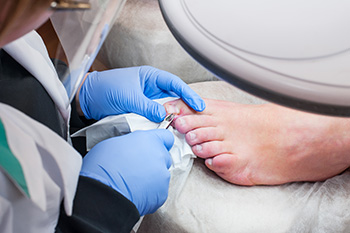
An ingrown toenail occurs when the edge of the nail grows into the surrounding skin, often resulting in pain, redness, swelling, and sometimes infection. It may appear inflamed, feel tender to the touch, and may produce drainage, if infected. Contributing factors include improper nail trimming, wearing ill-fitting footwear, or trauma to the toe. Podiatrists treat ingrown toenails using various methods, including partial or full nail removal, topical or oral antibiotics, and, in some cases, a surgical procedure to permanently prevent regrowth of the problematic portion of the nail. Following surgical treatment, it is important to follow your podiatrist’s postoperative instructions carefully. This typically includes keeping the foot clean and dry and avoiding strenuous activity for up to two weeks, or as advised. Wearing open-toed or loose-fitting shoes helps to reduce pressure on the healing toe. Your podiatrist will provide guidance on proper nail care to prevent recurrence, such as trimming nails straight across and avoiding wearing overly tight footwear. It is suggested that you contact your podiatrist promptly if you experience increased pain, redness, swelling, drainage, or signs of fever post-surgery.
Ingrown toenails may initially present themselves as a minor discomfort, but they may progress into an infection in the skin without proper treatment. For more information about ingrown toenails, contact one of our podiatrists of BayCity Associates in Podiatry . Our doctors can provide the care you need to keep you pain-free and on your feet.
Ingrown Toenails
Ingrown toenails are caused when the corner or side of a toenail grows into the soft flesh surrounding it. They often result in redness, swelling, pain, and in some cases, infection. This condition typically affects the big toe and may recur if it is not treated properly.
Causes
- Improper toenail trimming
- Genetics
- Improper shoe fitting
- Injury from pedicures or nail picking
- Abnormal gait
- Poor hygiene
You are more likely to develop an ingrown toenail if you are obese, have diabetes, arthritis, or have any fungal infection in your nails. Additionally, people who have foot or toe deformities are at a higher risk of developing an ingrown toenail.
Symptoms
Some symptoms of ingrown toenails are redness, swelling, and pain. In rare cases, there may be a yellowish drainage coming from the nail.
Treatment
Ignoring an ingrown toenail can have serious complications. Infections of the nail border can progress to a deeper soft-tissue infection, which can then turn into a bone infection. You should always speak with your podiatrist if you suspect you have an ingrown toenail, especially if you have diabetes or poor circulation.
If you have any questions, please feel free to contact our offices located in Erie, PA and Meadville, PA . We offer the newest diagnostic and treatment technologies for all your foot care needs.
Understanding Mueller‑Weiss Syndrome
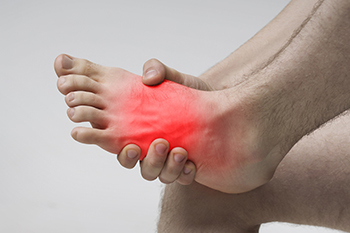
Mueller‑Weiss syndrome is a rare condition that affects the middle of the foot, but podiatrists are seeing it more frequently. It occurs when the navicular bone, located at the top of the arch, loses its blood supply and begins to collapse. This can lead to chronic foot pain, stiffness, and changes in the shape of the foot. Although the exact cause is not fully understood, it may be linked to abnormal foot structure, past injuries, or uneven pressure on the foot over time. Most patients are adults, often women in their forties to sixties, and the pain usually develops slowly. Because it can be mistaken for other foot issues, a proper diagnosis is important. Treatment may include custom orthotics, special shoes, targeted exercises, or surgery, in severe cases. If you have ongoing midfoot pain, a podiatric evaluation is suggested.
Some foot conditions may require additional professional care. If you have any concerns, contact one of our podiatrists of BayCity Associates in Podiatry . Our doctors can provide the care you need to keep you pain-free and on your feet.
Rare Foot Conditions
The majority of foot conditions are common and can be treated by a podiatrist. Standard diagnostic procedures are generally used to identify specific conditions and treatment can be rendered. A podiatrist also treats rare foot conditions which can be difficult to diagnose and may need extra attention and care.
There are many rare foot conditions that can affect children. Some of these can include:
- Freiberg’s disease
- Kohler’s disease
- Maffucci syndrome
Freiberg’s disease - This can be seen as a deterioration and flattening of a metatarsal bone that exists in the ball of the foot. It typically affects pre-teen and teenage girls, but can affect anyone at any age. Symptoms that can accompany this can be swelling, stiffness, and the patient may limp.
Kohler’s disease - This often targets the bone in the arch of the foot and affects younger boys. It can lead to an interruption of the blood supply which ultimately can lead to bone deterioration. The patient may limp or experience tenderness, swelling, and redness.
Maffucci syndrome - This affects the long bones in a child’s foot leading to the development of abnormal bone lesions. They are benign growths and typically develop in early childhood and the bones may be susceptible to breaking.
A podiatrist can properly diagnose and treat all types of rare foot conditions. If your child is affected by any of these symptoms or conditions, please don’t hesitate to call our office so the correct treatment method can begin.
If you have any questions, please feel free to contact our offices located in Erie, PA and Meadville, PA . We offer the newest diagnostic and treatment technologies for all your foot care needs.
